Hydrophilic vs. Hydrophobic Paint Protection Film: A Technological Comparison
2026/3/9

In the automotive care industry, paint protection film technology is undergoing revolutionary changes. Hydrophilic and hydrophobic PPFs represent two distinct approaches to vehicle protection, each offering unique ways to shield your car. Let's explore the principles, characteristics, and applications of these two technologies.
Hydrophilic PPF: The Invisible Wiper Effect
Principle & Characteristics
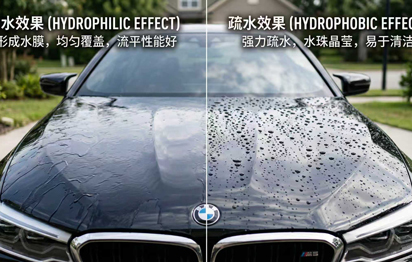
Hydrophilic paint protection films utilize special coating technology that creates a highly water-attractive surface. When water contacts the film, it doesn't form droplets but instead spreads evenly into a thin film that sheets off the vehicle in a controlled manner as you drive.
Advantages:
Minimal water spotting and reduced mineral deposits
Uniform water runoff maintains visibility while driving
Easier cleaning with light contaminants washing away with water
Ideal For:
Rainy and humid climates
Owners seeking mirror-like finishes
Commercial vehicles requiring consistently clean appearances
Hydrophobic PPF: The Lotus Effect
Principle & Characteristics
Hydrophobic PPF mimics nature's "lotus effect" with micro-nano surface structures that prevent water droplets from adhering. Water beads into perfect spheres that easily roll off, taking surface contaminants with them.
Advantages:
Exceptional anti-contamination properties
Dramatic beading effect with strong visual appeal
Reduced washing frequency and easier maintenance
Ideal For:
Dusty urban environments
Automotive enthusiasts seeking visual impact
Owners wanting to minimize maintenance time
Comparative Analysis
|
Feature |
Hydrophilic PPF |
Hydrophobic PPF |
|
Water Behavior |
Sheets evenly off surface |
Beads and rolls off quickly |
|
Contamination Resistance |
Moderate, relies on water sheeting |
Excellent, dust rolls off with beads |
|
Visual Appearance |
Mirror-like, subtle |
Pronounced beading, high-tech look |
|
Maintenance Needs |
Requires professional periodic cleaning |
Relatively simpler daily maintenance |
|
Durability |
Typically 3-5 years |
Typically 2-4 years |
Choosing Between Them
Choose Hydrophilic PPF if:
You live in an area with prolonged rainy seasons
You prefer consistently clean appearance without dramatic beading
Driving visibility during rain is a priority
Choose Hydrophobic PPF if:
Your vehicle is frequently exposed to dusty conditions
You enjoy the visual appeal of water beading
You want to reduce car washing frequency and effort
Conclusion
Whether choosing hydrophilic or hydrophobic protection film, both represent sophisticated approaches to vehicle care. Hydrophilic PPF acts like a meticulous butler, quietly maintaining your vehicle's cleanliness, while hydrophobic PPF functions as an active guardian, repelling external elements. Understanding their distinct properties allows you to select the optimal protection based on your specific needs, environment, and aesthetic preferences. Technology continues to make automotive protection smarter and more specialized, ensuring every car owner can find the perfect "invisible shield" for their vehicle.

Anhui Julun New Materials Technology Co., Ltd. All rights reservedDisclaimerAnhui ICP No. 2025083127
Technical support:Netnew Technology(www.ibw.cn)
Contact: Manager XieTel: 13321916539
Address: No. 18, Jinger Road, Quanjiao Economic Development Zone, Chuzhou, Anhui